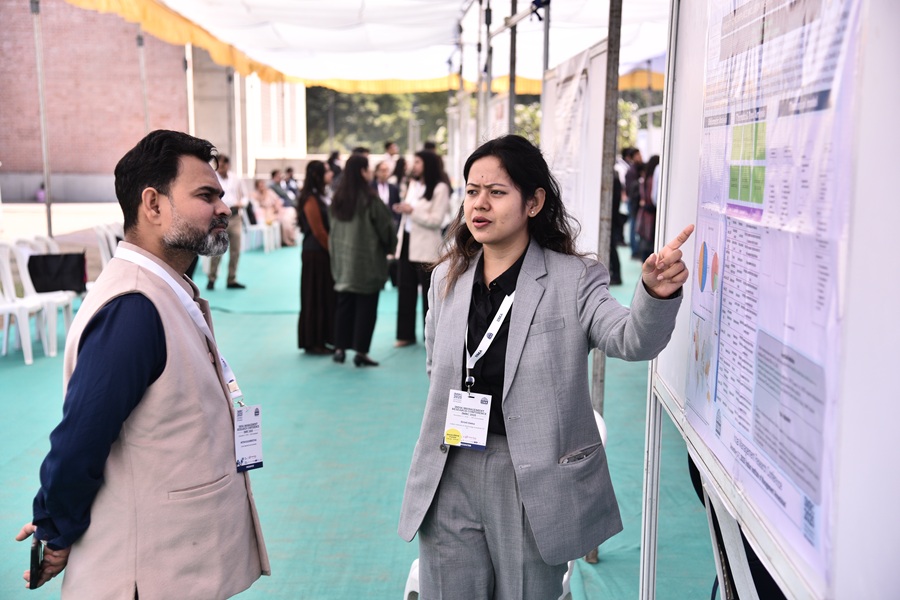
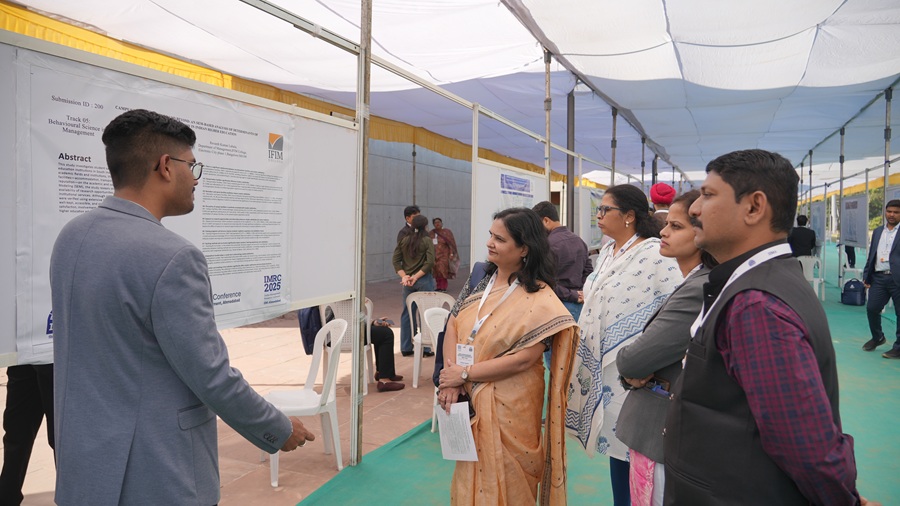
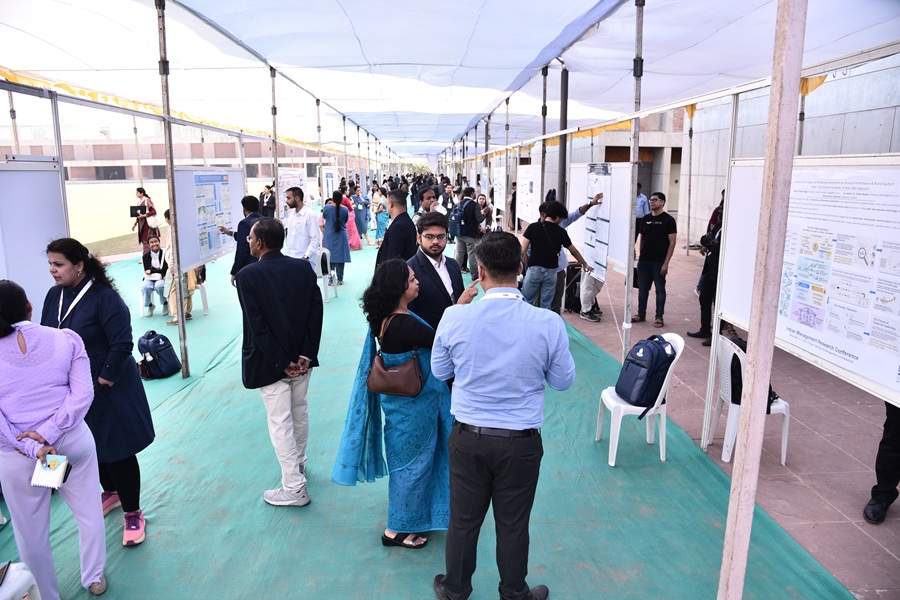
~ The concluding day featured a conference-wide poster presentation session, where over 80 participants presented their research across diverse areas of management
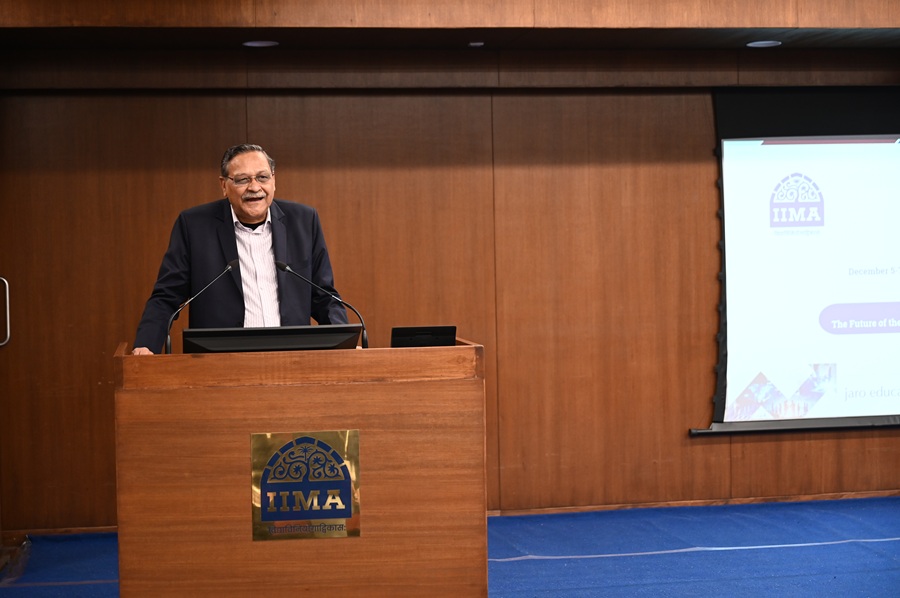
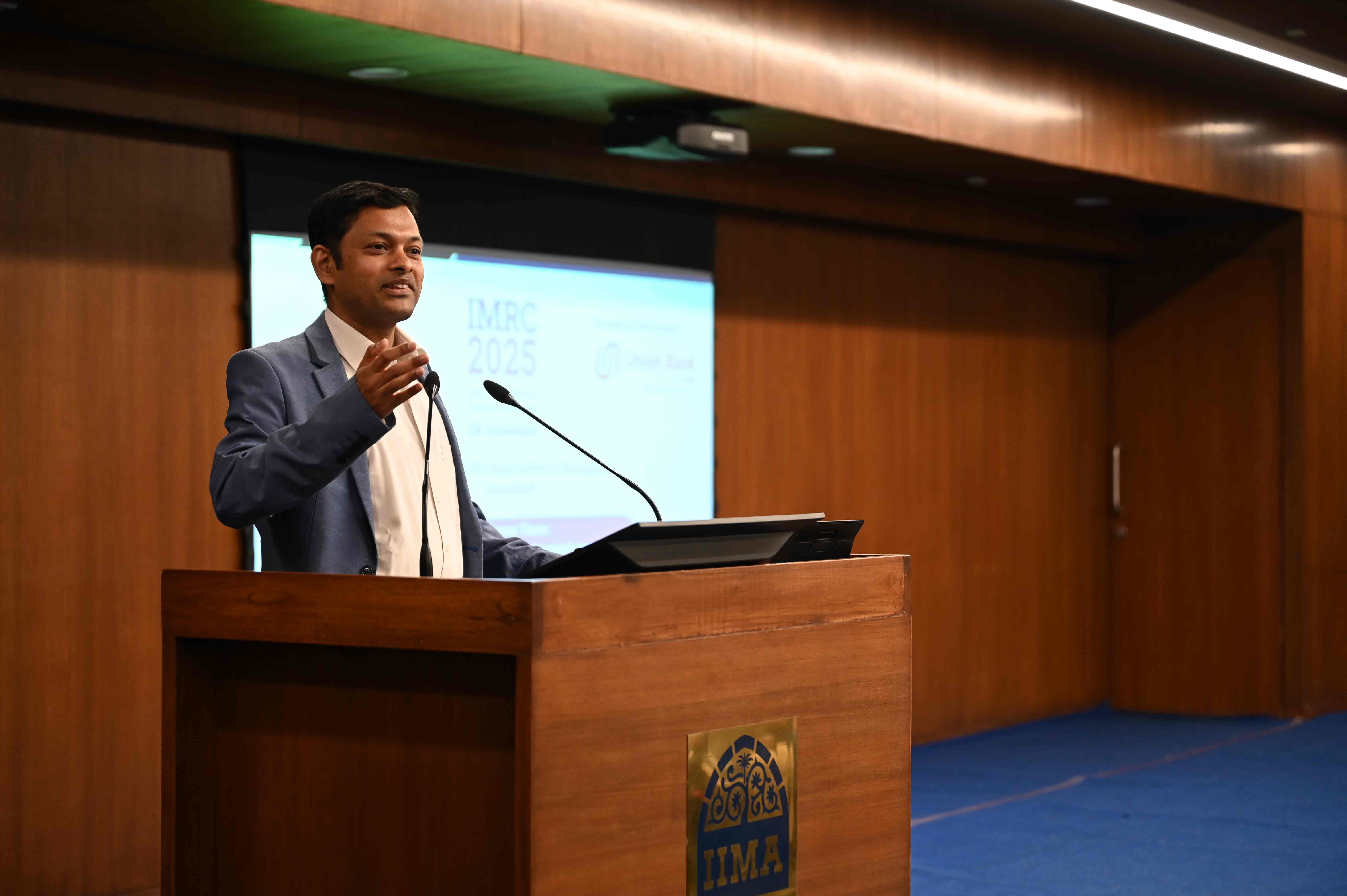
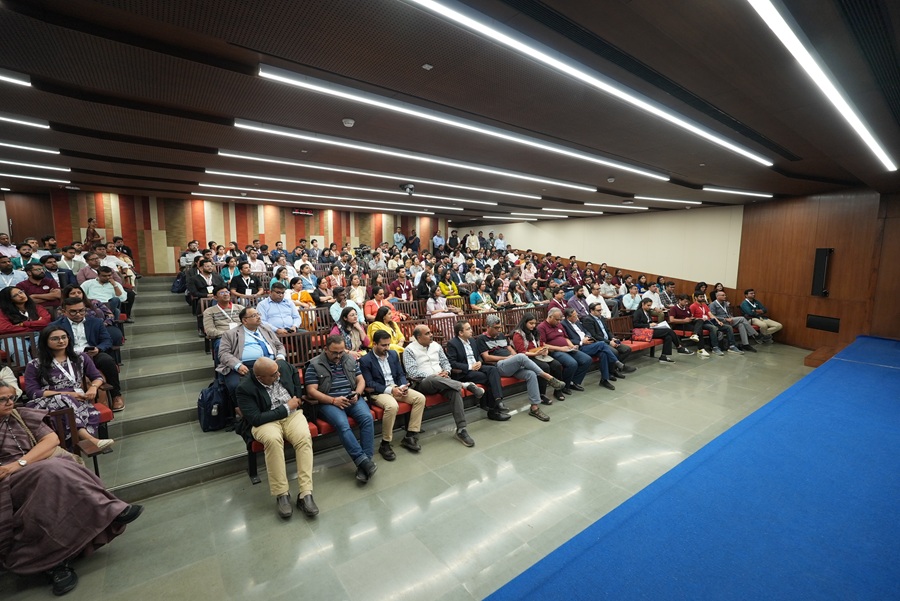
December 07, 2025: The Indian Institute of Management Ahmedabad (IIMA) successfully concluded the second edition of the India Management Research Conference (IMRC 2025) at its campus today. Held from December 5-7, 2025, the three-day conference drew participation from over 850 global scholars, researchers, and academics from diverse fields to deliberate on the theme “The Future of the Economy: People, Organisations, and Policy.”
Building on the momentum of the first two days, which were marked by keynote addresses, panel discussions, workshops, and enriching track-level sessions, the final day of IMRC 2025 showcased the intellectual diversity and research depth that defined the conference.
The concluding day featured a conference-wide poster presentation session, where over 80 participants presented their research across diverse areas of management. This interactive forum enabled scholars to engage in meaningful dialogue, receive feedback from peers and experts, and explore opportunities for future collaboration. Some of the research topics included: ‘Bridging Healthcare Inequity through Digital Transformation: A Demographic Analysis in India’, ‘Aesthetic Brains, Strategic Brands: Mapping the Neuroaesthetics–Neuromarketing Interface’, ‘International Solar Power Transmission: Scenarios to 2050 – A Strategic Analysis for Low Emissions Development Pathways’, ‘How do Private Equity Investors hit the nail on the head? Scouting Target Firms for Value Creation’, ‘Psychological and Behavioral Outcomes of Perceived Brand Coolness’, and ‘Analysing the Spread of Misinformation by News Media: A Game- Theoretical Approach’, among others.
In addition to the poster presentation session, track-wise paper presentations and other workshops continued throughout the three days across all 12 research tracks. These sessions explored the various perspectives shaping contemporary management research. The ‘Unpacking the Indian Startup Story’ track showcased four startup teaching cases exploring early-stage dilemmas and growth challenges. The track also featured presentations on tech advancement, DPI investments, and startup culture, with discussions led by IIMA faculty stressing women empowerment and sustainable MSME development.
The Digital Transformation track organised a track keynote on “Digital Systems and Frontline Workers: Insights from Two Empirical Studies on Public Health Supply Chains in Developing Economies” by Prof. Anant Mishra, Director of Research and Professor of Supply Chain, Vin University, Vietnam. He highlighted how digital systems and onsite training can reduce stockouts in public health supply chains. The track also featured 16 thematic research paper presentations spread over 5 sessions on themes, including Consumer Technology, Digitalisation and sustainable development, e-Governance/Digitisation of public goods, and Technology Adoption.
Furthermore, the Corporate Sustainability and Corporate Governance (IRCC 2025) track hosted keynote addresses by Prof. Gireesh Shrimali on measuring and mitigating physical climate risks and Shri Manu Srivastava on large-scale renewable energy implementation. It also hosted panel discussions, mentor-led paper sessions covering a wide spectrum of themes.
In the Low Emissions Development Strategies track, researchers and practitioners examined emerging evidence on heat stress, low-emission urban planning, and subnational climate pathways, alongside insights from paper presentations. Prof. Leona Chandra delivered the keynote on Leadership and Delegation in the Age of AI Agents. The track also launched the India LEDS Research & Action Platform, jointly developed by IIM Ahmedabad and Kalpa Impact. The India Marketing Conference track featured high-quality doctoral presentations across CCT, Consumer Behaviour, and Marketing Strategy. The track also hosted a workshop on modern quantitative marketing methods by Prof. Arnab Laha. Other events included mentor-led PDW sessions guided by experts.
In addition to paper presentation sessions, the Management in Health Services track held three panel discussions on ‘Viksit Bharat @ 2047: Roadmap’, ‘Frontline Workers for Access to Healthcare’, and ‘Public Health in India – Way Forward.’ Additionally, the Behavioural Science in Management track featured a workshop on ‘Behavioural Tools’ conducted by Prof. Mayur Jartarkar and two panel discussions on ‘Women at the Workplace’, and ‘Economics and Behaviour’.
The Transportation and Logistics track featured three sessions: ‘Framework for Doing Empirical Research in Supply Chain Management’ by Prof. Vinod Singhal, ‘A tutorial on inventory management’ by Prof. Amar Sapra, and ‘Why Did My (Empirical) Paper Get Rejected at XYZ Journal – Insights from a year as an Editor in Chief’ by Prof. Shashank Rao. The track also hosted oral presentations.
Leadership Research & Practice in the Context of Changes in the World of Work track featured a workshop on ‘Integrating Design Research into Leadership and Management Studies,’ 25 oral paper presentations. It also held two symposia on ‘Spatial Theory and Leadership in the Digital Era’, and ‘Applying Kurt Lewin’s Change Management Frameworks to Navigate Transformational Shifts in Business School Faculty Work Culture’. The track keynote was delivered by Prof. Leona Chandra.
The Gold & Precious Metals: Business and Economic Policies track featured Chief Guest Addresses by Dr. Duvvuri Subbarao on ‘The Allure of Gold for Central Banks,’ and Mr Sridhar Vembu, on ‘Innovation and the Strategic Role of Gold in Economic Systems’. The keynote addresses included ‘The Evolving Structure of India’s Gold Markets’ by Praveena Rai, ‘Gold Economy in India: People, Policy and Practice’ by Prof. Anindita Chakrabarti, and ‘From Lockers to Markets: Transforming the Trust in Gold’ by V. S. Sundaresan. The panellists and speakers included policymakers, regulators, academics, and industry leaders.
The three-day conference concluded on a high note with a valedictory ceremony and reflections on key takeaways from the diverse sessions and discussions that unfolded over IMRC 2025.
In his valedictory address to the participants, Prof. Bharat Bhasker, Director, IIMA, outlined that although Indian academic institutions started pursuing research more rigorously only in the last 15-17 years, much later than other neighbouring countries like China and South Korea, we have gained pace in a short time to be world no. 3 in research output. But as the research culture and environment progressed, in recent years, the government has also pumped in significant research funding to meet increased demand and boost quality research in the country. Reflecting on the conference's success, he said, “Just as the neighbouring countries like China and South Korea created their own international conferences as an enabler to boost research in their country, IMRC is IIMA's attempt to create an enabler in the management domain to encourage India-centric research at a global scale. It serves as a platform to share ideas, find collaborators to work on those ideas, and continue to publish in international journals. We realise that there is a long way ahead, but with these kinds of enablers, India will continue to climb up in the research domain in the times to come.”
Sharing his reflections on the conference, Prof. Debjit Roy, Conference Convener, said, “We were thrilled to witness the depth and diversity of research emerging from institutions across India. This reflects the strong and meaningful work being carried out in various domains. What researchers now need is to step up their writing, problem definition, editing skills, and the way they engage with reviewers to build stronger publications. One of the exciting themes that emerged at IMRC 2025 was the growing focus on building AI-enabled research capacity- how AI tools can help bridge research insights for practitioners, and class session learnings be extended beyond using AI tools such as Google Gems. I hope IMRC 2025 offered inspiration and momentum for participants to take their research journeys forward.”
About IIM Ahmedabad:
The Indian Institute of Management Ahmedabad (IIMA) is a premier global management Institute that is at the forefront of promoting excellence in the field of management education. In more than six decades of its existence, the Institute has been acknowledged for its exemplary contributions to scholarship, practice, and policy through its distinctive teaching, high-quality research, nurturing future leaders, supporting industry, government, social enterprise, and creating a progressive impact on society.
IIMA was founded as an innovative initiative by the Government, industry, and international academia in 1961. Since then, it has been consolidating its global footprint and today it has a network with over 80 top international institutions and a presence in Dubai. Its eminent faculty members and around 46,000 alumni, who are at the helm of influential positions in all walks of life also contribute to its global recognition. Over the years, IIMA’s academically superior, market-driven, and socially impactful programmes, have earned a high reputation and acclaim globally. It became the first Indian institution to receive international accreditation from EQUIS. The Institute is also placed first in the Government of India’s National Institutional Ranking Framework (NIRF), India Rankings 2025. The Institute has been ranked 35th globally in the Financial Times (FT) Executive Education (Open) Rankings 2025. The renowned flagship two-year Post Graduate Programme in Management (PGP) is ranked 39th in the FT Masters in Management Ranking 2024 and the Full-Time One-Year Post Graduate Programme in Management (MBA-PGPX) has been ranked 31st in the FT Global MBA rankings 2025.
IIMA offers consultancy services and more than 200 curated executive education programmes in customised, blended, and open enrolment formats for a diverse audience comprising business leaders, policymakers, industry professionals, academicians, government officials, armed forces personnel, agri-business, and other niche sector specialists and entrepreneurs.
To know more about the Institute, please visit: https://www.iima.ac.in/
For media queries, please contact:
Ms. Shivangi Bhatt | manager-comm@iima.ac.in | and
Ms. Saumya Mishra| pr@iima.ac.in